
How to Fit a No-Pull Head Collar (and Help Your Dog Get Used to It)

If your dog drags you down the street, a no-pull head collar can make walks calmer for both of you. It works on a simple idea: where the head goes, the body follows. Here's how to fit one properly and help your dog get comfortable with it.
How a head collar works
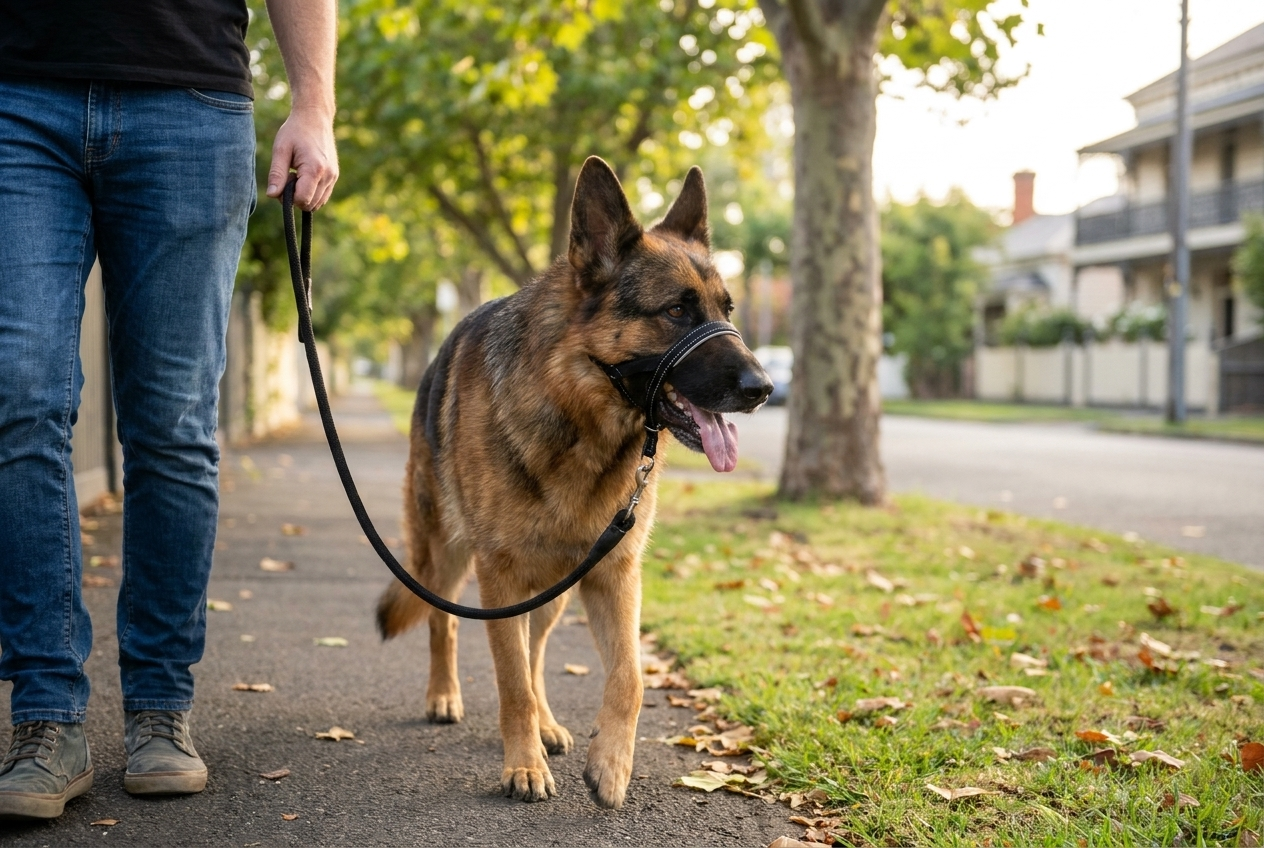
A head collar has a loop that sits around your dog's muzzle and a strap that sits behind the ears, with the lead clipping on under the chin. When your dog surges ahead, their head turns gently back towards you. That takes the power out of pulling without putting pressure on the throat.
Getting the fit right
Neck strap: sits high, just behind the ears. It should be snug, with room for about one finger underneath.
Nose loop: sits below the eyes. It should be loose enough that your dog can open their mouth, pant, drink and take a treat, but not so loose it slides off the end of the nose.
Size: our LeadEase head collars come in M, L and XL. Each product has a size chart and a how-to-measure guide. If your dog is between two sizes, take the larger.
Introduce it slowly
Let your dog sniff the head collar and reward them for it.
Hold the nose loop open with a treat on the other side, so your dog puts their nose through by choice.
Do it up for a few seconds at a time indoors, with treats, before your first walk.
Some pawing at the nose loop is normal at first. Keep your dog moving and interested rather than stopping to fuss.
On the walk
Keep the lead loose and let the head collar do the work. Never jerk the lead.
Keep a regular collar on as well, for ID tags.
Short, positive sessions work best. Reward your dog for walking beside you.
Browse our no-pull head collars, or get everything in one go with a head collar set that includes a matching lead and collar.


Comments